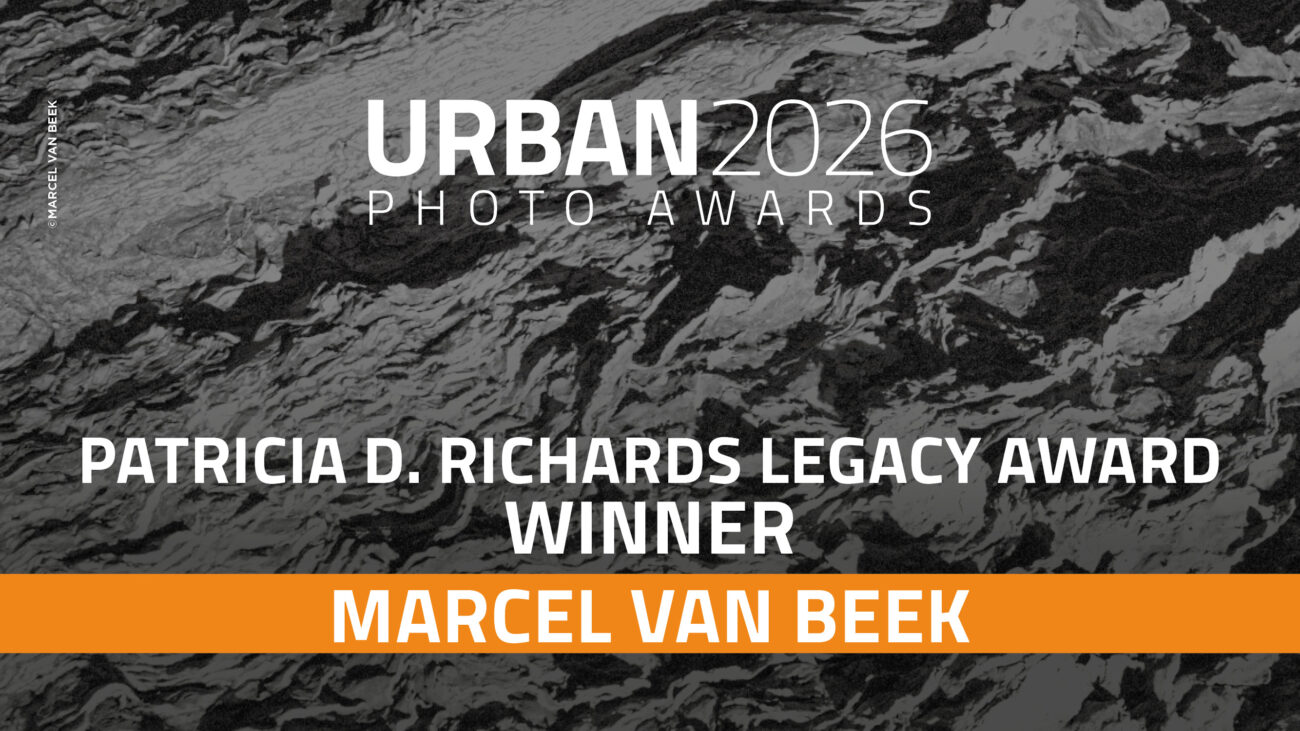
The Future Was Extracted Here. Marcel van Beek wins the 2026 Patricia D. Richards Legacy Award
We are proud to announce that German photographer Marcel van Beek has won the 2026 Patricia D. Richards Legacy Award with The Future Was Extracted Here, a black-and-white sequence on the landscape of coal.
Van Beek photographs the Central German coalfields around Leipzig, where lignite mining, power generation, district heating, GDR-era housing estates and post-mining lakes coexist in a single layered landscape. Van Beek reads this territory as a condition that is still active: coal as a source of heat, work, housing and a promise of progress, and at the same time as the origin of an environmental legacy we are now called upon to confront. In several images the artist uses tonal inversion, which makes familiar places unreal and holds the photographs between document and memory.
The jury that selected the winning project was chaired by Claudia Colecchia, Head of the Photo Library and Library of the Civic Museums of History and Art of the Municipality of Trieste.
Patricia D. Richards Legacy Award: a legacy of empathy and commitment
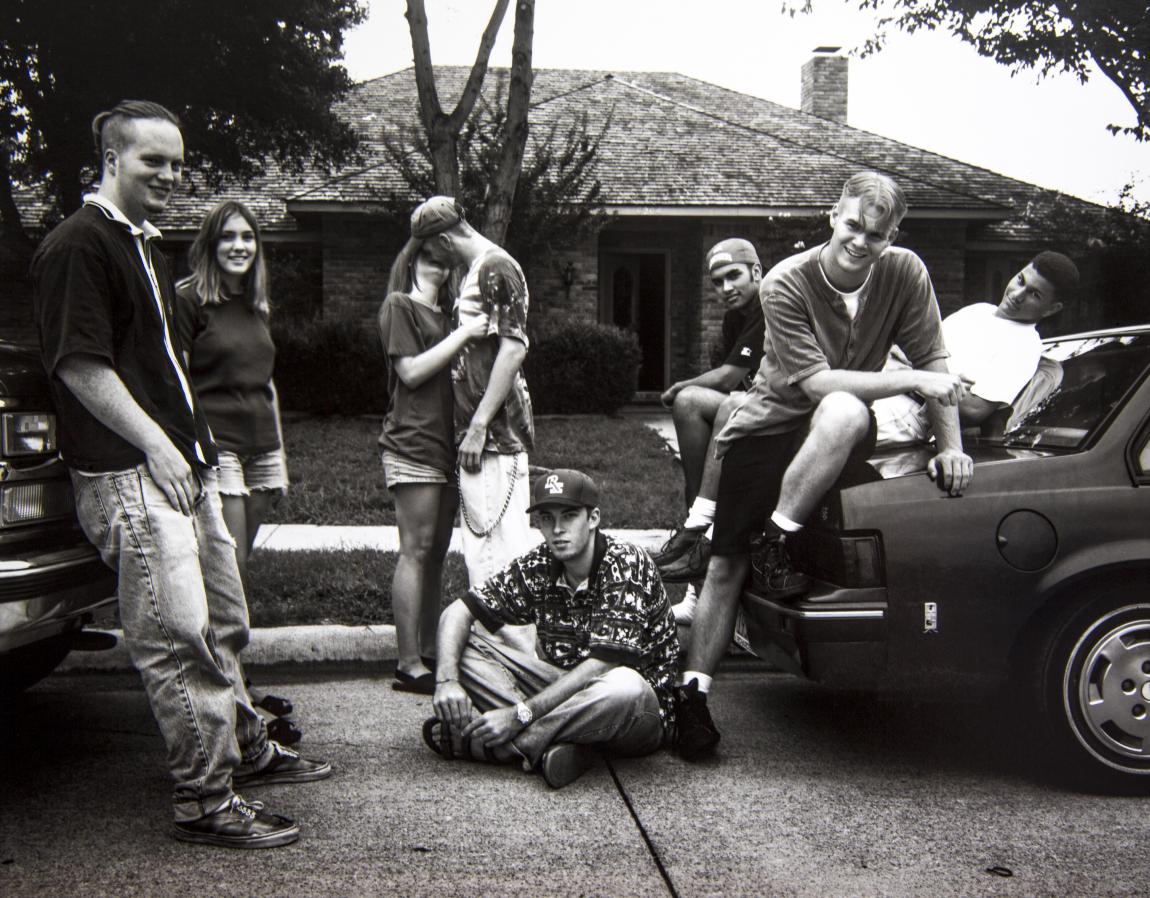
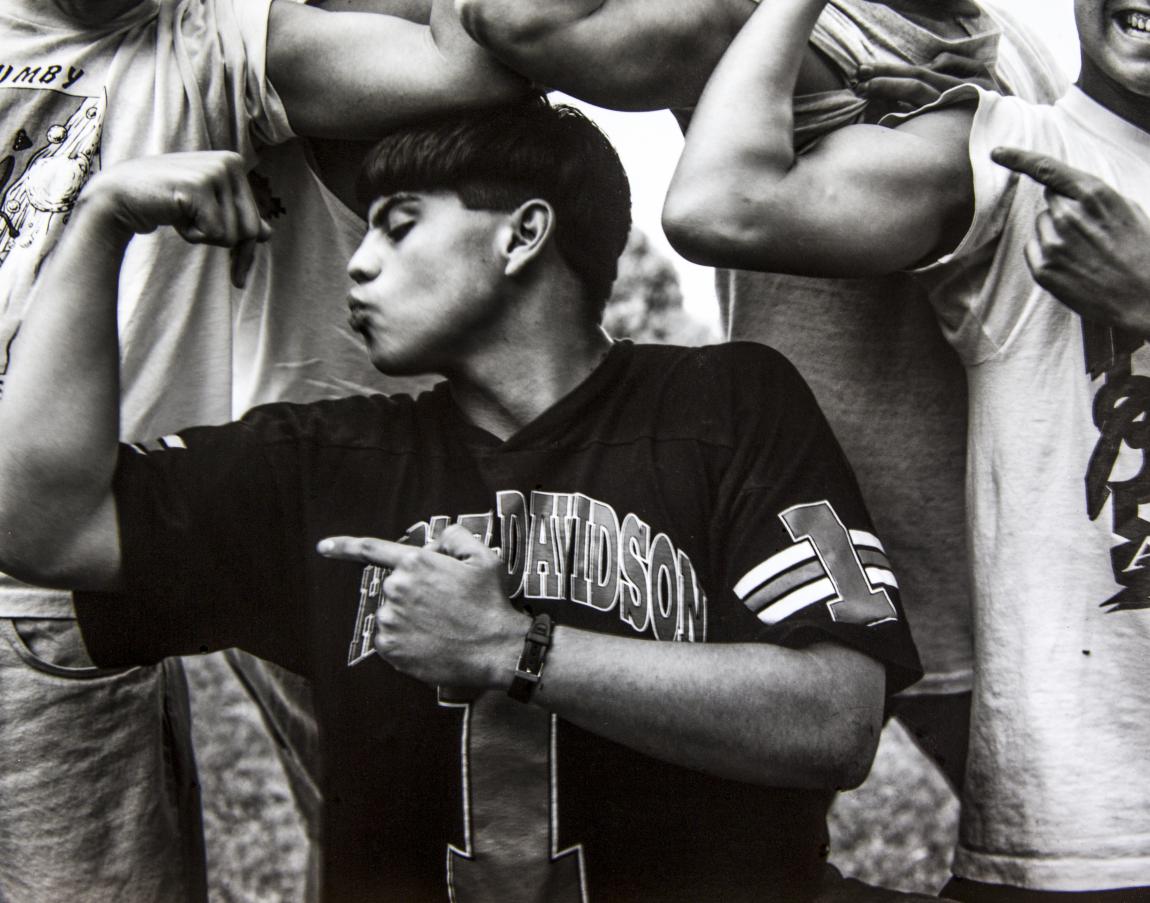
The Patricia D. Richards Legacy Award was established in 2024 in honour of Patricia D. Richards (1951-2022), an American photographer and educator who made the camera an instrument of social inquiry and understanding. For over forty years, Patricia turned her lens toward the transformations of American society, with particular attention to communities often left out of the dominant narrative. Her series on migrant workers and the civil rights movement are held in the permanent collections of institutions including the Museum of Fine Arts Houston, the Harry Ransom Center at the University of Texas at Austin and the Amon Carter Museum of American Art.
The Award is presented every year to the best portfolio submitted by an Under-35 photographer in the Projects & Portfolios section of URBAN Photo Awards, with the aim of supporting and promoting the next generation of socially engaged visual storytellers.
The cultural associations dotART and Exhibit Around, organisers and promoters of the URBAN Photo Awards contest and of the Trieste Photo Days festival, warmly thank the family and friends of Patricia D. Richards for their invaluable support in creating this Award.
Claudia Colecchia on van Beek’s work
Marcel van Beek’s project The Future Was Extracted Here approaches the landscape of coal not as evidence of an industrial age now over, but as a presence still at work in the making of our present. Through a rigorous sequence of black-and-white images taken in the mining territories of Central Germany, the artist examines the relationship between energy, urban development, collective memory and environmental transformation.
The work focuses on the lignite coalfields around Leipzig, where mines, power stations, housing estates built during the East German period and new post-mining landscapes coexist in a single layered territory. Van Beek does not produce a reportage on the place, but uses this landscape as a symbolic space in which to make the legacy of fossil modernity visible.
The project belongs to the tradition of German industrial photography, which examined sites of production as signs of the economic and social transformation of a territory. Here, however, industry does not appear as something separate from human life, but as a structure that has shaped habits, landscapes and expectations of the future.
One distinctive element of the series is the use of tonal inversion in some of the images. This choice is not purely aesthetic: it produces a perceptual estrangement in which familiar places become almost unreal images, suspended between document and memory. In the photograph showing domestic housing with the great plume of the power station behind it, the photographer builds a sharp contrast between the private dimension of the home and the presence of energy infrastructure. Coal emerges in all its ambivalence, a source of heat, work and prosperity as well as the origin of a complex environmental legacy.
The strength of the project lies precisely in its refusal of a simplified narrative. Van Beek presents the industrial past neither as a period to be celebrated nor as a mistake to be erased, but as a condition still with us. The images question the relationship between what secured the progress of the twentieth century and the consequences we are called upon to face today.
The closing of the sequence is particularly telling: the post-mining landscape is shown through an everyday scene, a few bicycles at the edge of a lake born from the transformation of extractive land. The image offers no easy idea of rebirth or of nature restored, but suggests a new and provisional way of inhabiting a space marked by human intervention. The territory preserves the memory of extraction, and becomes at the same time a place of new practices and new forms of relationship.
For a young-author prize, Marcel van Beek is a photographer of real interest, combining a solid awareness of the history of industrial landscape photography with a contemporary sensitivity to the energy transition and to the transformation of territories. The project shows an ability to use photographic language not merely to describe a place, but to question the way a society builds its own idea of the future.
About the author: Marcel van Beek
Marcel van Beek (Bonn, 1990) is a German visual artist and photographer who has lived and worked in Leipzig since 2020. From 2012 to 2017 he studied painting, graphic art and photography at Alanus University of Arts and Social Sciences in Alfter, near Bonn, where he was taught by Michael Reisch and Andreas Orosz and graduated with distinction with a Bachelor of Fine Arts. Before beginning his art studies he completed an internship in stage design and theatre production at the Junges Theater Bonn, and his attention to theatrical space and painterly composition continues to inform his photographic work.
At the centre of his research is the relationship between humanity and nature under the conditions of climate change, investigated in cycles such as Unsustainable Earth, Urbs accommodata, Planetary Boundaries and World of Water, devoted to planetary boundaries, urban adaptation, biodiversity and the role of water within ecosystems. He collaborates with Leipzig University and with the Helmholtz Centre for Environmental Research (UFZ), for which he contributed in 2024 and 2025 to the lecture series Interdisciplinary Perspectives on Municipal Climate Adaptation. His works are held in public collections, including that of Leipzig University, and further pieces are displayed at the UFZ on long-term loan. Alongside his ecological projects he develops series devoted to architecture, shadows, forests and vegetal movement: in Chlorophyll Trance he uses intentional camera movement to present plants as fields of rhythm, energy and light.
He has exhibited in solo and group shows since 2014. Major projects include Carboniferous at Leipzig University, Unsustainable Earth at the UFZ, Naturraum::Stadtraum in Leipzig, Urbs accommodata at Leipzig University Library, Planetary Boundaries at the German Environment Agency in Dessau and World of Water at Aschaffenburg University of Applied Sciences. His photographs have also been shown in Berlin, Glasgow, Athens, Geneva and Minneapolis, and have received numerous international distinctions. His publications include Schattenlicht. Werke 2012-2022, Unsustainable Earth, Naturraum::Stadtraum, Übergänge and the bilingual German-English photobook World of Water.