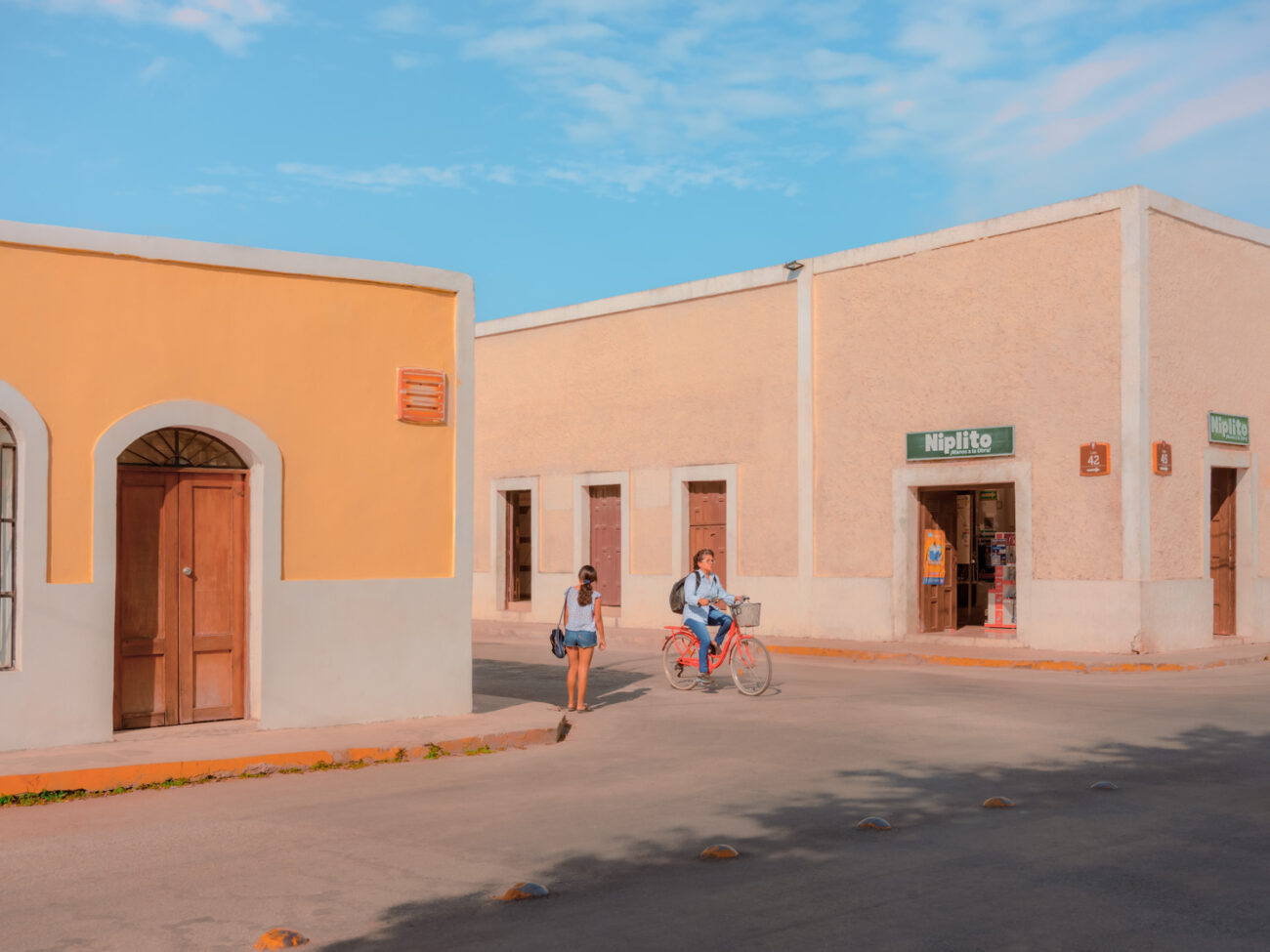
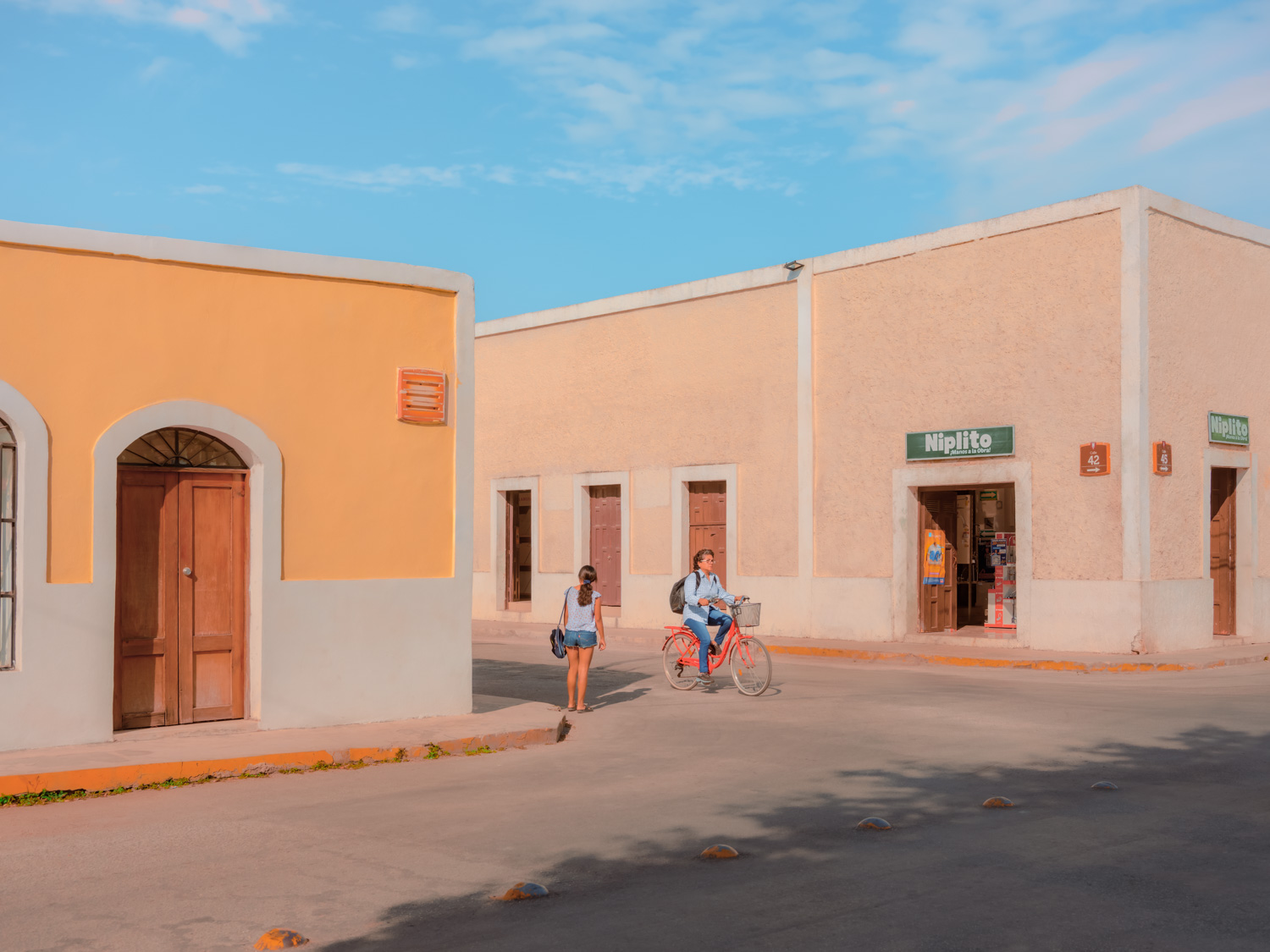
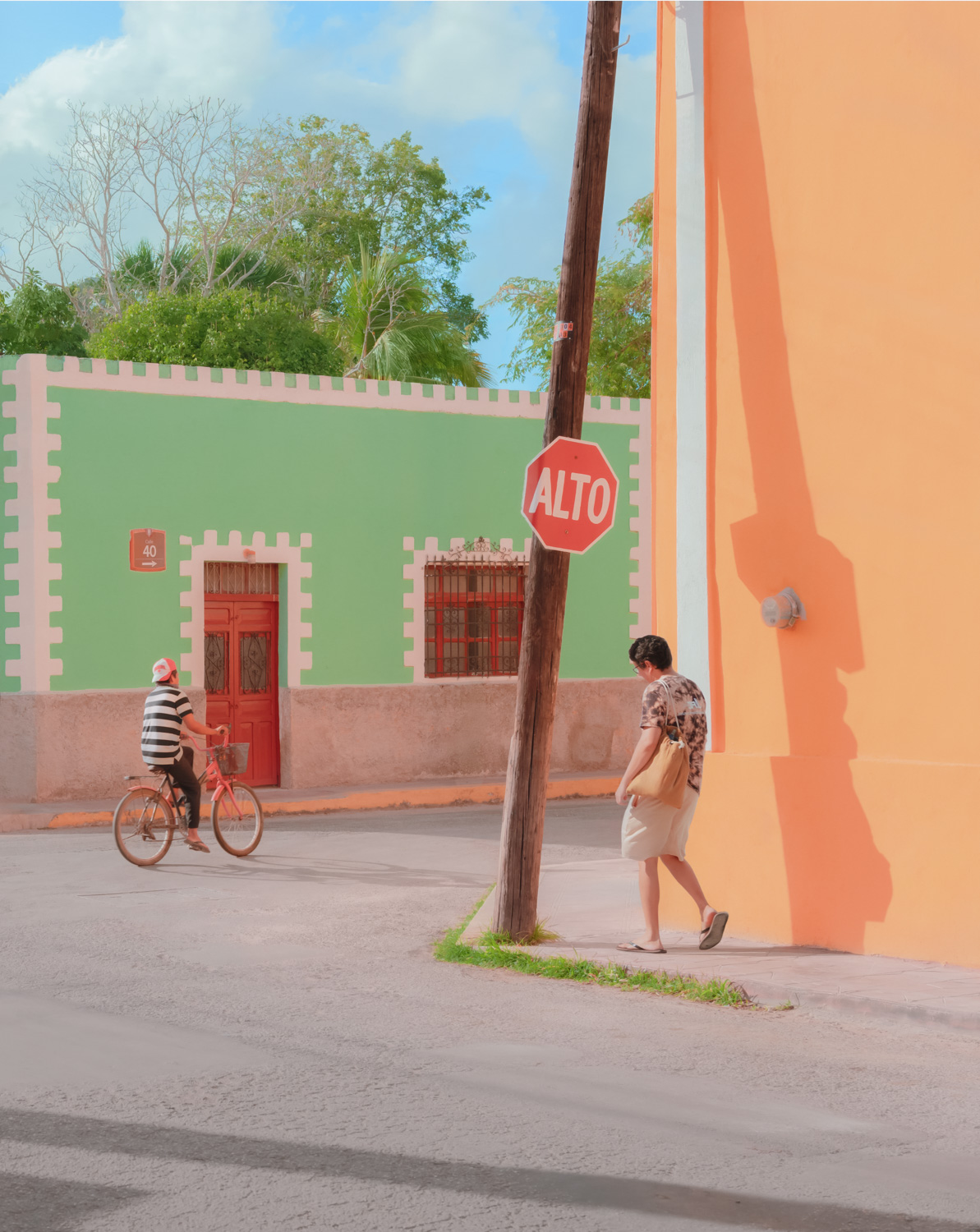
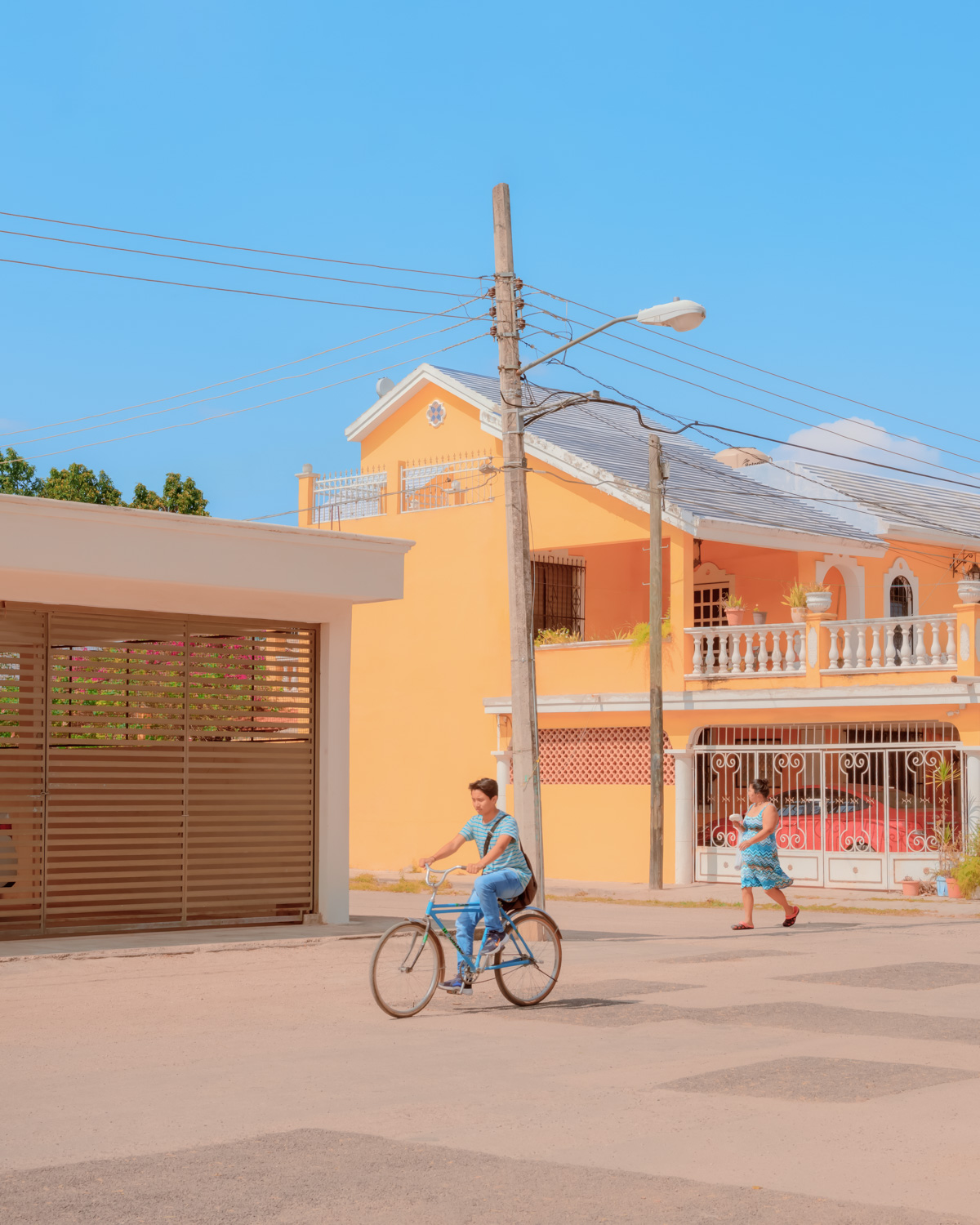
Photo © Krzysztof Bednarski
Interview with Krzysztof Bednarski, winner of the URBAN Photo Awards 2024 Projects & Portfolios award / #URBANinsights
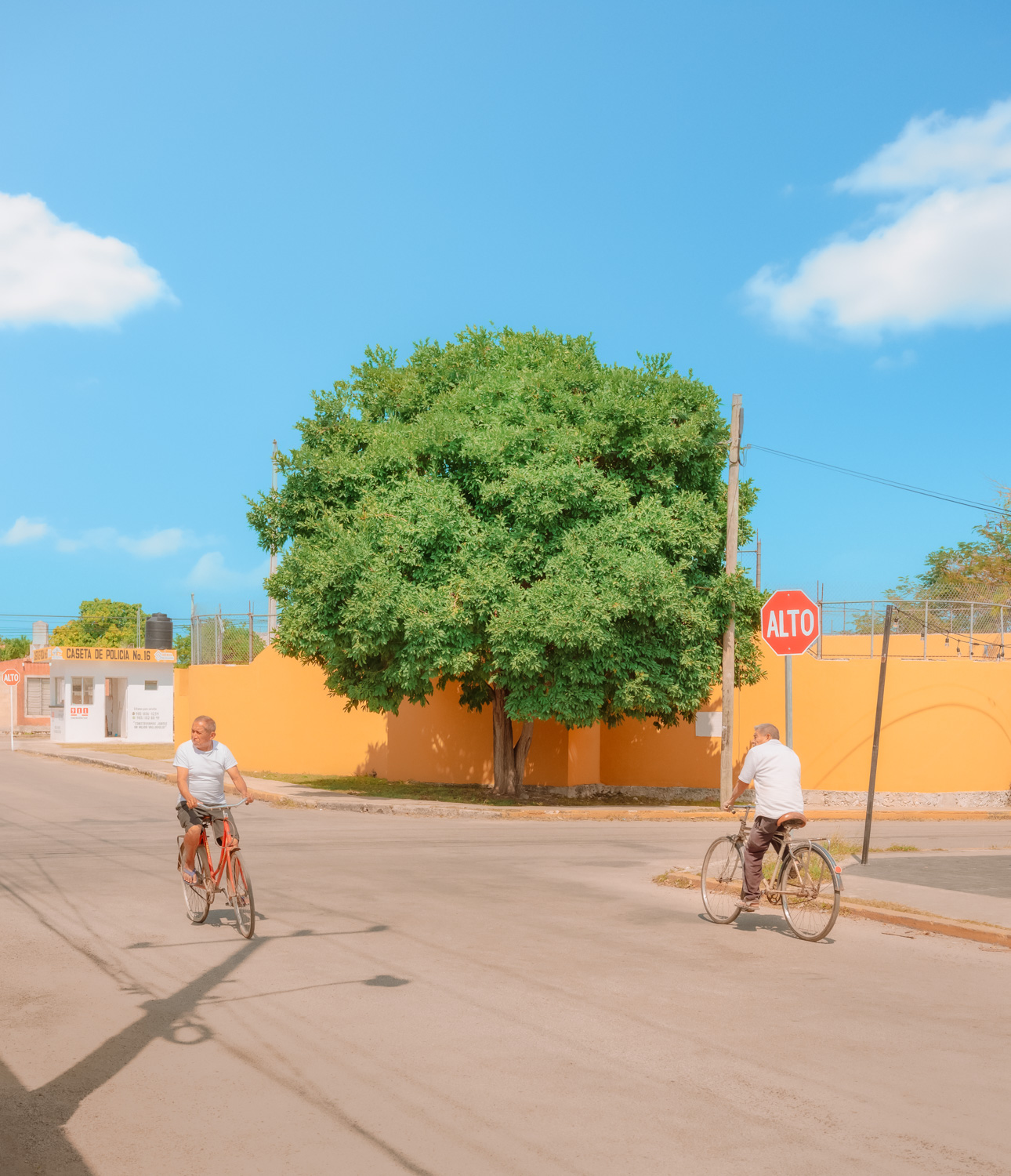
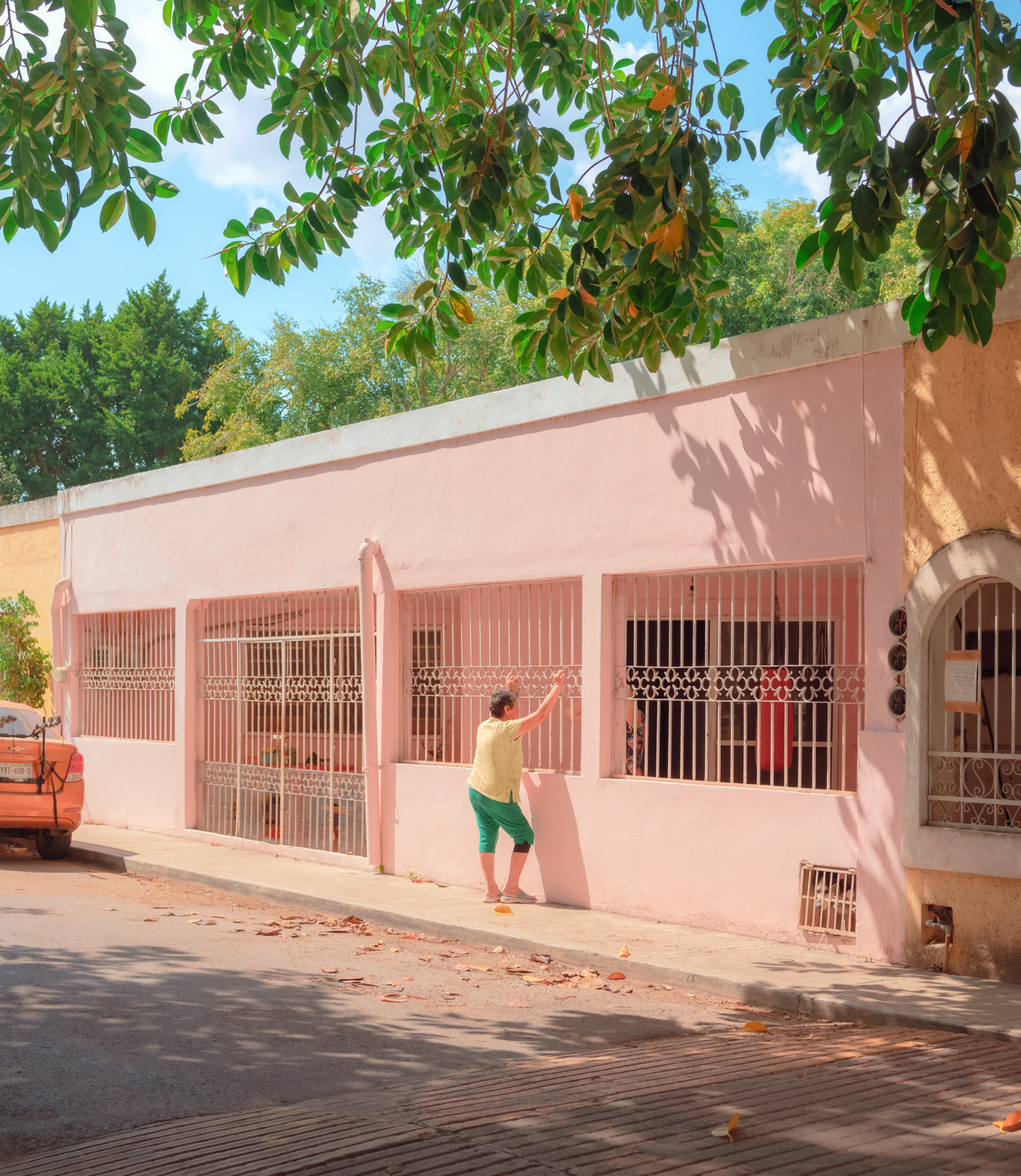
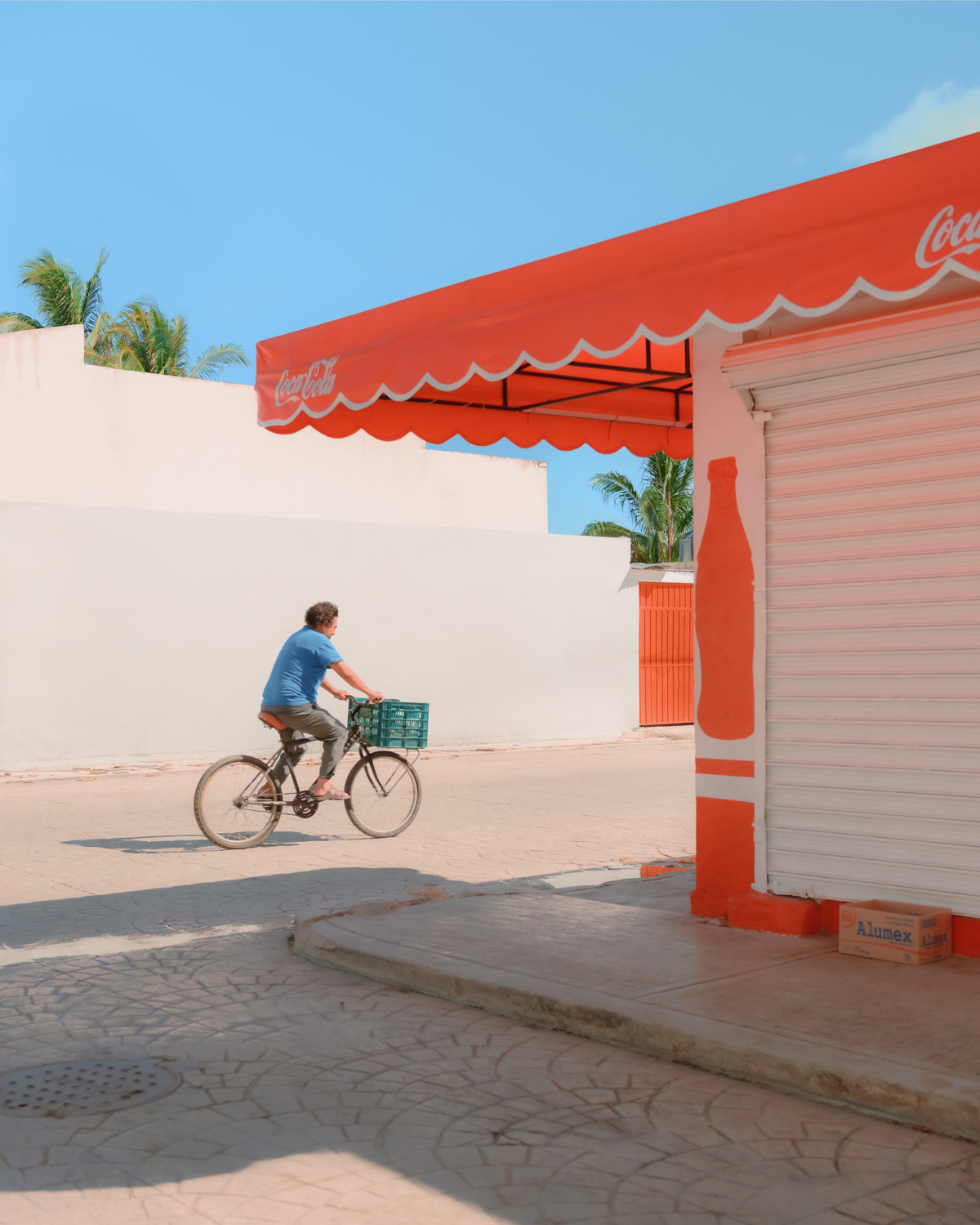
#URBANinsights is a series of exclusive interviews and insights dedicated to the winners of URBAN Photo Awards. This feature highlights Krzysztof Bednarski, winner of the 2024 Projects & Portfolios award with the project “La Vida Lenta”. Born from a personal shift toward stillness, solitude, and simplicity, inspired by small-town Mexico, the series was praised by Adam Pretty, President of the Projects & Portfolios Commission, for its graphic strength and compositional rigour. Through a masterful interplay of light, shadow and form, Bednarski invites us into a gentle pause: a quiet moment of absolute calm within the urban environment.
Anil Purohit: Thank you for taking the time to talk to us, and congratulations on winning the 2024 Projects & Portfolios award for “La Vida Lenta”. Tell us how this project came about?
Krzysztof Bednarski: Thanks, Anil. I really appreciate the recognition in the Projects & Portfolios category at the 2024 Urban Photo Awards. Each acknowledgment like this means a lot; it’s a motivator to keep pushing forward creatively, especially with work that comes from a personal place.
La Vida Lenta came about quite naturally. I’ve dealt with anxiety and OCD for much of my life, and after years of working in high-pressure environments like television networks and advertising, I find myself drawn more and more to the opposite: stillness, solitude, simplicity.
Traveling alone, observing quiet moments, has always given me a kind of relief. I’ve been trying to live at a slower pace – less work, more space to breathe. The idea of Slow Living resonates with me, and this project grew out of that shift. You could say it became a visual way of exploring that yearning for simplicity.
Anil: When I first saw your series “La Vida Lenta”, I was taken in by its timeless feel. A meditative calm seemed to descend on the scenes, one that makes the traveller sit and converse with the quiet, accompanied by time waiting alongside, ready to move when you do. The flat low-rise structures don’t impose themselves on the scene, serving more as punctuations to pace silences, directing their flow around corners, spreading calm and unhurried grace even as they move life around in synergy with the built environment.
While I would imagine the photographer would be averse to making any movement lest it ruffle the air of quiet I think the instinct would be to ‘capture’ the quiet.
When you first happened upon the place tell us about the impression it made on you as a visitor and the flow it put you in before you set out to document it, and the connection it fostered with you over time.
Krzysztof: That’s very nicely put. And I completely understand that instinct to preserve the quiet. I actually struggle with the opposite at times – I’m quite a shy photographer. I often hesitate, afraid that stepping in might disrupt the rhythm of a moment. There have been so many scenes I’ve let pass, simply because of the fear of being seen and interfering with the natural flow of the moment. I often say that the best photographs are the ones I did not take. But I’ve learned to accept that as part of my process and try to move forward quickly from missed opportunities. In small towns of Mexico, I immediately felt a sense of alignment – not just aesthetically, but in terms of tempo. In the places I visited life moves at a pace that suits the way I like to observe. It’s not rushed. There’s space between things – between gestures, between people. That rhythm allowed me to slow down, to blend in quietly and watch without pressure. It created a kind of mutual calm: I wasn’t chasing moments but rather waiting for them to arrive.
Anil: Life is omnipresent in your images – people cycling, walking, and standing. The humans offer a counterpoint to the otherwise empty spaces, as if without the other for a length of time, neither the spaces nor humans would feel complete, each providing relief to the other, two faces of the same coin.In including human life in the scenes instead of just still life, what was this project hoping to transform for the viewer – the quiet? the life? the life of quiet? or something else?
Krzysztof: Although I sometimes photograph empty spaces, it’s actually quite rare. People have always been central to my work – even if they only take up a tiny part of the frame. In my mind, they are the subject. I really like your metaphor of two sides of the same coin. Context is everything. The person and the space in dialogue with each other. One gives meaning to the other. The same figure placed in a different environment would shift the entire emotional tone of the image. The architecture, the light, the surrounding emptiness – they all shape how we perceive that individual and vice versa.
Anil: Often, the architecture, urban design and culture set the character of the place – the identity and atmosphere of the place. What is the nature of relationship you want to see between humans and their urban settings before determining you want to photograph it? Is it driven by your aesthetic vision for the form you want to achieve or is it something else?
Krzysztof: I often say I feel most comfortable somewhere between documenting and storytelling. The scenes I photograph are candid, but the version I present might not reflect the literal truth of a place – it’s more like my imagined version of it. It’s less about capturing hard reality and more about capturing the atmosphere of an imagined movie that’s quietly playing in my head in that particular setting.I’m drawn to urban environments that fit a certain aesthetic – simple forms, clean lines – but it’s the harmony (or tension) between people and those settings that really completes the image for me. Often, I’ll find an interesting location first and stay there, waiting for the right subject to enter the frame. Many people might pass through, but I’ll keep waiting until someone fits the vibe or narrative I have visualized internally.
So yes, I’m guided by an aesthetic vision – it’s quite intuitive. It’s about finding moments where the real and the imagined overlap just enough.
Anil: What do your photographs mean to you in general, and this series in particular?
Krzysztof: For me, photography is a way of reconnecting with myself. It helps me slow down and be present, especially in contrast to the fast-paced anxiety I’ve often lived with. For me, my photographs are a reminder of the experience I had while taking them.
Anil: Visual stimuli evoke emotional responses to varying degrees, be it happy, sad, melancholy or meditative.In taking a photograph please share what underpins your overarching purpose – is it a means to record a time and place, or a purely artistic exploration of form or a desire to retain and experience the original visual stimuli you first felt at the scene, with the photograph now serving to remind and evoke your initial emotional response to the scene long after you have left the place?
Krzysztof: Exactly the latter. For me it’s less about documenting what was in front of me, and more about capturing how I felt while observing. It’s my way of preserving an emotional response – a visual souvenir of a fleeting mood. Of course, beyond that, there’s also an imagined story I’m trying to share. I like to look at photography as capturing a single frame from a story that exists only in my head. So in that sense, it’s also about sharing a piece of that internal narrative. Something between reality and fiction, between observation and imagination.
Anil: In “La Vida Lenta” you employed Minimalism to great effect, channelling the viewer toward spatial elements, helped along by the absence of any distractions, thus evoking certain emotions for the elements. In leading viewers’ gaze to the elements lends those elements a degree of significance in the scene and transforms them into points of remembrance and recall. How do you see the use of clean lines and simplified forms in the context of your visual storytelling and does this approach cross-inform your vocation as a designer and animator in Advertising?
Krzysztof: Like most photographers, my style has evolved over time. A decade ago, I was photographing urban settings in a more reactive, documentary way – faster paced, more chaotic, more energetic. These days, I find more satisfaction in the process of creating something quieter, more planned out, more intentional. I don’t think one approach is better than the other – just different energies. The minimalist aesthetic, the clean lines and simplified forms, speak more closely to my visual nature now.
Anil: As an exploration of the urban environment and its usage, your project’s minimalistic approach, helped along by the nature of urban setting in small-town Mexico, harks back to an earlier era, one of sparsely populated open spaces, natural light, neutral colours, low-rise buildings and vernacular architecture.Its form reminds of the minimalistic approach Edward Hopper used but stops well short of Hopper in his use of starkness to portray realism of American life – alienation, solitude, loneliness, melancholy etc. where he employed minimalism to construct works of narrative and emotional depth, inviting introspection and reflection, forcing contemplation of the human condition.
Do you see your minimalist approach expand from your current exploration of people’s relationship with their surroundings to exploring complexities of modern life and whether the photographic medium and minimalist approach can aid these explorations in today’s day and age?
Krzysztof: Absolutely – small towns like Valladolid were almost tailor-made for the kind of visual language I’m drawn to. The spacious streets, low-rise buildings, and lack of crowds made it easier to achieve the sense of stillness and balance I often look for. I do relate to the idea of alienation or solitude as a narrative device. It’s something I aim for even in busier cities like New York, Tokyo, or Paris – though in those environments, it takes more patience and is sometimes more challenging. I still try to isolate subjects, to find that moment of clarity within the chaos. Looking forward, I’m definitely interested in expanding beyond just places or urban landscapes. I’d like to explore more specific subjects and themes – still through a minimalist lens, with my own aesthetic, but maybe with a deeper conceptual layer. I think minimalism can be a powerful way to confront the complexities of modern life, precisely because it removes the noise and makes you sit with the essential.
Anil: Minimalism in art rose in no small measure as a counter to modernism and abstract expressionism of the post world war era which in turn traces its origins from art moving away from social realism of the Great Depression years. At some level the art movements captured the zeitgeist of their eras, shaped by their times as a function of the societies they emerged from and catered to.
In current times do you see the possibility of a similar parallel in photography where the direction of photographic ‘movement’ marshals the zeitgeist of our present times toward a form of expression that informs and shapes the response?
Krzysztof: I don’t believe there’s one single photographic style that defines or captures the spirit of our time. If anything, today’s world feels too diverse and fast-moving for that. I think many photographers, each in their own style, reflect different aspects of current moments. With the pace at which people are creating now, and the constant search for new forms of expression, we’re seeing more stylistic variety than ever. That said, my own use of minimalism does feel like a personal response to the overstimulation of modern life. For me, photography is a way to slow down, process what’s around me, and sometimes escape from the noise. But I don’t see this as part of a movement or grand commentary. It’s simply my way of navigating the world and offering something that feels honest to my own experience.
Anil: In his comment on your project, Adam Pretty, President Commission Projects & Portfolios, says, “I really appreciate the graphics, composition and the shapes and all the elements, light shadow all working together. That for me is what makes a great photograph, it is a moment captured with a number of combined elements, almost working backwards starting with a blank canvas that is the scene or background and waiting for the subjects to hit their marks and create the perfect composition and blending of all the elements.” Tell us about the process you follow, from choosing the location, the choice of visual aesthetic/form to deciding on the elements to compose, the moment, and the composition itself.
Krzysztof: I really appreciate Adam Pretty’s words about the project – it’s always rewarding when someone notices how much thought goes into the balance of elements in an image. As we’ve touched on earlier, I try to operate somewhere between imagination and observation. I usually have a rough idea of the type of scene I’m looking for, but I also respond to what the environment offers me. It starts with a location that speaks to me visually – strong geometry, color harmony, architectural rhythm. Light is a big part of that. Since I know how I’ll treat the image in post, I pay close attention to the strength and direction of light on location. I often think of being outdoors as working in a giant studio – with the sun being my main directional light.
Once I find a setting that feels right, I’ll usually wait. Sometimes 15 minutes, sometimes 2 hours. I’ll let people pass through the frame until someone appears who fits the imagined narrative I’ve built in my head. It’s mostly intuitive but there’s also sometimes a lot of patience required. It’s about letting the real world align, just for a moment, with the version I see in my head.
Anil: Winston Churchill once said, “We shape our buildings; thereafter they shape us.” Can this parallel also work with photographs where the images function as a force of transformation of society and the individual navigating their daily life, and do you see your own work aspiring to this function, of shaping in some way those who see and experience it?
Krzysztof: That’s a powerful quote, and I do think it can apply to photography – at least in certain contexts. There are definitely photographs in history that have had a transformative impact. I’m thinking about iconic images like Migrant Mother by Dorothea Lange (1936), Raising the Flag at Iwo Jima by Joe Rosenthal (1945), or even the Pale Blue Dot image of Earth taken by Voyager I in 1990 – those photographs go beyond aesthetics. They challenge, they shift our perspective.But my work operates on a much smaller scale. I don’t aspire to have any transformational impact. My images are more like quiet invitations. If someone viewing my image pauses for a few seconds longer than expected, I consider that a privilege.
Anil: Where do you draw your inspiration from that informs and shapes your photographic eye – movies, books, photographers? Please list some inspirations.
Krzysztof: A loaded question. The simple answer would be: everywhere. But if I had to pick one influence, I’d probably say film. Ironically, my visual aesthetic isn’t particularly cinematic in the traditional sense – it leans more painterly and graphic. But I’m drawn to the idea of the photograph as a single frame from a larger story, like a still pulled from a film. That approach resonates with me.
Anil: What would you tell someone wanting to enter into photography? How should they approach photography and why?
Krzysztof: I’d say: just start. Try different things – different genres, techniques, approaches – and you’ll eventually find what resonates with you the most. Years ago, I went through a phase where I was doing studio shoots for fashion and advertising. It was a valuable experience, but it didn’t bring me the same kind of fulfillment I get from the photography I do now. It sounds like a cliché, but: do what you enjoy. Explore freely, don’t get too hung up one style or one genre. As you try things out, your own personal style will develop naturally over time.
Anil: Where do you see yourself as a photographer 2-3 years from now and what do you hope the visitor takes away with them after seeing your photography?
Krzysztof: A few years ago, I probably would’ve answered this with more ambition – more projects, more output, more everything. I used to put a lot of pressure on myself to keep pushing, creating, growing. But right now, I feel more content. What I value most is balance – creatively and personally. I’m not chasing the next big opportunity. I want to keep creating at my own pace, for myself first. And if that work resonates with others, that’s a nice bonus. As for what I hope visitors take away from the La Vida Lenta series – maybe just a moment of stillness. A pause. A small sense of quiet.